300mm lens comparison on x-ray film

Nas

Very Active Poster
Registered User
Joined
Aug 22, 2021
Messages
624
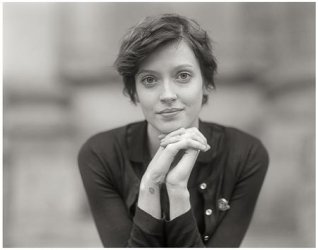
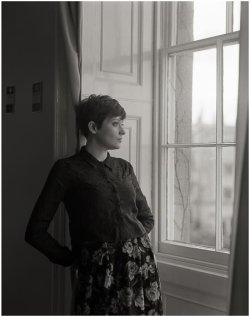
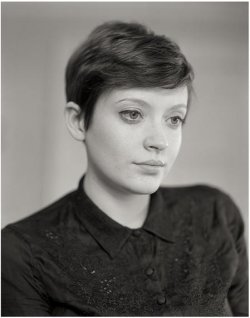
I wanted to test some expired (6 years) x-ray film and thought it would be a good opportunity to test two different 300mm lenses at the same time. My previous test with this film was very underexposed when using an LED panel and a portable strobe. This time I used daylight on a cloudy day, the results are much better. Something I dislike in close-up head shots is an extremely shallow depth of field where the eyes are sharp but the nose is a blurry blob. For that reason I stopped the lenses down to bring the nose more into focus but not completely. The light level changed slightly between the shots and that's why the apertures used are not the same. I spot metered from a grey card and exposed for that. The sky isn't blown out on either shot. The distance from the camera to the head didn't change between shots but I noticed there was a change in size on the ground glass when I changed lenses. For this test I wanted to find the optimum ISO and dev time which is why there is a 1 minute difference in dev time between the shots. Despite shot 2 having 1 minute extra dev time the contrast is lower. I scanned both of these using the black and white points of the histogram and applied the exact same contrast adjustment in Lightroom before exporting them 2-up.

I'm sharing this for anyone interested. I enjoy researching about how different lenses perform but something I find frustrating is endless words and discussion on forums without pictures to illustrate. Without seeing this side by side test I would never have guessed there would be much of a difference. I know which lens I could happily let go.

Camera: 10x8 Tachihara / Film: Fuji 100 NIF / Film size: 18x24cm / ISO 100 / Dev: Rodinal 1+50
SHOT 1 Lens: 300mm f/4.2 Plaubel Anticomar @ f8.5 (front swing)
SHOT 2 LENS: 300 f/4.5 Schneider Xenar @ f8 (front swing)

Fuji_100NIF_X-ray_Test_web.jpg
 
Ideally we need to know more about the lenses, both are Tessar type designs. Are the lenses coated? The Plaubel lens has a red O between the SN and the Acticomar if coated, early Schneider coated lenses had a red Triangle, this was later dropped, but any Schneider LF lens past SN 4 or 5 million without the triangle would be coated

I have quite a number of Tessar & type lenses, the difference in contrast between Uncoated and Coated lenses is noticeable in use. I used a CZJ T coated 150mm f4.5 Tessar for quite a few years quite happily alongside Multi Coated lenses,

A few years ago I did some tests specifically looking at contrast and vintage lenses, a 120mm f6.8 Dagor, a 165mm f5.3 Tesssar, an Ihagee-Goerz 135mm f6.8 Anastigmat, and some wide angle lenses. I used a DSLR with bellows.

The results were as expected the Dagor had excellent contrast, with only 2 internal air/glass surfaces, the Tessar a drop with 4 air/glass surfaces, and the Ihagee-Goerz, which is a Dialyte, quite a significant drop in contrast, with 6 internal air/glass surfaces.

Ian
 
My Xenar (SN 4445979) doesn't have any red markings, my Plaubel Anticomar has a red circle. I gravitate towards faster lenses, hence my interest in buying the Plaubel Anticomar with its f/4.2 aperture. I have a Carl Zeiss Tessar 16.5cm f/2.7 which I like for portraits on 5x4 as well as a Kodak Aero Ektar 7 inch f/2.5 but for a dreamier look I like my Dallmeyer 8 inch f/2.9 on 5x4 (it does actually cover 10x8).

Portrait from my Zeiss Tessar 16.5cm f/2.7 below, made on a Speed Graphic, HP5, dev in HC110 1+31.

20220811_Speed-Graphic_165mm_HP5_HC110B_02_web.jpg
 
Last edited:
I'm very intrigued to know the criteria you use or characteristics you look for, in deciding which lenses you like or those you could happily let go?
 
I'm very intrigued to know the criteria you use or characteristics you look for, in deciding which lenses you like or those you could happily let go?
Great question. It's hard for me to quantify. When I look at an image I know whether something visually appeals to me or not and this is why I prefer to see sample images instead of discussing tech specs. I appreciate this isn't a helpful answer so lets say it's down to how the depth of field (bokeh) looks, contrast and distortion. I rarely stop my lenses down very far so overall clinical tack sharpness you get with digital is not something I'm looking for.

This is steering away from the original topic of this thread but as a comparison to the image above made with the 16.5cm lens, here's one made with a much more modern Docter Optic 210mm f/4.5 Tessar lens. I appreciate this is closer in but overall this has a more modern look to me. Neither is right or wrong, just personal preference as to which you prefer if you had to pick one.

From my research these lenses were made in a very small quantity, more info here.

20240504_Walshy_Chamonix_210-4.5_FP4_Promicrol_1-9_02_web_01.jpg
 
Last edited:
My Xenar (SN 4445979) doesn't have any red markings, my Plaubel Anticomar has a red circle. I gravitate towards faster lenses, hence my interest in buying the Plaubel Anticomar with its f/4.2 aperture.
No red triangle on a Schneider 1954/5 means most likely uncoated, hence the contrast difference. I'd agree on which lens to keep. All the lenses I've had from this era have had the coating sympols.

I'd always wanted a 165mm f2.7 Tessar, I just missed out on one from MW Classic a few years ago in a Compur shutter at a very good price, but luckily I didn't as it had is . . . . . .

One of the 1930s CZJ lens catalogues mentions the differences in the qualities of the various speed LF Tessar lenses. The sharpest are the f6.3, the f4.5 us the general purpose lens, then the f3.5 and later 165mm f2.7 for press and low light use.

The trade-off with increasing the fastest aperture is edge sharpness drops off more rapidly with wider aperture lenses, and also overall critical sharpness when stopped down. But then these characteristics are often desired for portraits.

Ian
 
I harvested my 165mm f2.7 lens from a camera which was too far gone. I think it was a Contessa something or other. The flange is too large to fit on a Speed Graphic board so I had to have a custom board 3D printed. I do enjoy softer lenses especially for portraits. The Dallmeyer Pentac 8in f2.9 lens I use was a WWII aerial recon lens. Mine have seen a lot of action with all sorts of haze that won't clean off but the results are to my liking. It's the results which matter at the end of the day.

Here's a shot with a Pentac on HP5.
Pentac.jpg
Here are a couple of shots with a Schneider 180/4.5 (can't remember which exact one). From memory I believe it's got the red triangle.
180_1.jpg180_2.jpg
 
You could probably learn more by giving him a hairpiece, and maybe a false moustache, you are starting with a subject with no really sharp features.


You are using one of the last 210mm Tessar lenses made, it would be a standard lens for a 7x5 camera, plus you are only using the centre portion of the lens, which is the sharpest.

I remember shooting some colour 6x6 images using E4 Ektachrome, of my then girlfriend, I'd guess 1978, I was using a very early pre-WWII Rolleicord with a Triotar lens, a Cooke Triplet. E6 films had just been introduced, and a commercial photographer friend gave me all his Ektachrome E4 120 film.

I hated E4 Ektachome, and had been shooting E4 Fujjichrome, but the uncoated Triotar tamed the Ektachrome contrast, and at wider apertures the Triotar was a superb portrait lens.

Ian
 
I harvested my 165mm f2.7 lens from a camera which was too far gone. I think it was a Contessa something or other. The flange is too large to fit on a Speed Graphic board so I had to have a custom board 3D printed. I do enjoy softer lenses especially for portraits. The Dallmeyer Pentac 8in f2.9 lens I use was a WWII aerial recon lens. Mine have seen a lot of action with all sorts of haze that won't clean off but the results are to my liking. It's the results which matter at the end of the day.

Here's a shot with a Pentac on HP5.
View attachment 5966
Here are a couple of shots with a Schneider 180/4.5 (can't remember which exact one). From memory I believe it's got the red triangle.
View attachment 5967View attachment 5968

I prefer the 180mm f4.5 Xenar image quality to the Pentac, but it's so subjective. They all work well.

Ian
 
I totally agree about the subjectivity and I also have difficulty interpreting Ed the head!

I like the insight that can be gained from viewing images shot with different lenses.
 
  • Like
Reactions: Nas
I prefer the 180mm f4.5 Xenar image quality to the Pentac, but it's so subjective. They all work well.

Ian
That's fine. I like variety. Hard to stick with just one.
 
You could probably learn more by giving him a hairpiece, and maybe a false moustache, you are starting with a subject with no really sharp features.
No doubt but I just use what I've got. On the odd occasion I've given him a pair of glasses to wear but as I always focus on his eyes I prefer not to have anything in front of them. Fred is just a handy test subject to have on hand, I'm not making art :D
 
Here are a few of shots made with a Kodak Aero Ektar 178mm f/2.5 aerial recon lens. The US version of the Dallmeyer Pentac. It has very distinctive bokeh on highlights. The more you stop the lens down the more it loses its distinctive quality. This lens was made popular by a photographer named David Burnett who has created some wonderful images with it especially at various Olympic Games.
After WWII there was a stock pile of these lenses. You can find adverts in old camera magazines selling military surplus gear. Unfortunately it doesn't work on a 5x4 Graflex Super D because of the length of the camera body, the 8 inch Pentac works perfectly. Some people mount the Aero Ektar on a 3x4 Graflex Super D and replace the back with a 5x4 but you can't fill the 5x4 sheet, you end up with closer to 4x4.
The colour shot was made on slide duplicating film which I pushed a stop, ISO 25.
I appreciate I'm getting further away from the original topic... :)

Aero_1.jpg
Aero_3.jpg
Aero_2.jpg
 
Nice separation between the subject and background.

Do you 'pre-calculate' camera to subject distance, f-stop and dof, or do you just take it as it comes?

If so, do you have a minimum dof, an adequate or satisfactory number of mm's/cm's in front and behind the plane of focus?
 
Nice separation between the subject and background.

Do you 'pre-calculate' camera to subject distance, f-stop and dof, or do you just take it as it comes?

If so, do you have a minimum dof, an adequate or satisfactory number of mm's/cm's in front and behind the plane of focus?
I just take things as they come, usually starting with a place where I like the light on my subject, then I'll look at the background and set up there. I don't have a minimum dof, I look at the ground glass and work from there. For portraits I try to keep the eyes in focus. One of my Speed Graphics has been modified to have front swing which is not available as standard and it's helpful for bringing both eyes in focus but it also depends on how still the subject is. There are limited shutter speeds available on Speed Graphics so that's a limiting factor depending on how much light you're working with.
 
My Xenar (SN 4445979) doesn't have any red markings, my Plaubel Anticomar has a red circle. I gravitate towards faster lenses, hence my interest in buying the Plaubel Anticomar with its f/4.2 aperture. I have a Carl Zeiss Tessar 16.5cm f/2.7 which I like for portraits on 5x4 as well as a Kodak Aero Ektar 7 inch f/2.5 but for a dreamier look I like my Dallmeyer 8 inch f/2.9 on 5x4 (it does actually cover 10x8).

Portrait from my Zeiss Tessar 16.5cm f/2.7 below, made on a Speed Graphic, HP5, dev in HC110 1+31.

View attachment 5955
According to Hartmut Thiele's _Großes Fabikationsbuch Schneider-Kreuznach Band II_, 300 mm Xenar s/n 4445979 is one of a batch of 19 with a date of 7 November 1955.

Wanting to get some sense of when Schneider stopped marking their coated lenses with a red triangle I took a look at today's ebay listings of the Angulon (because there are always a lot of this particular Schneider lens on ebay.)
The highest serial number with the triangle was 4352603; its batch of 240 is dated 5 September 1955. The lowest serial number without the red triangle is 4475083, one of a batch of 203 with a build date of 1 December 1955.

So I think we can say this 300 mm Xenar is coated and made right around the time that Schneider stopped marking coated lenses with a red triangle.

David
 
  • Like
Reactions: Nas
So I think we can say this 300 mm Xenar is coated and made right around the time that Schneider stopped marking coated lenses with a red triangle.

David
Thanks for doing the research, David. I've checked my lens and it's coated. This makes my test results even more surprising.
 
Thanks for doing the research, David. I've checked my lens and it's coated. This makes my test results even more surprising.

It does seem odd, I have slightly older Schneider lenses a 120mm Angulon, and a 360mm Tele-Xenar, as well as newer Xenars, and the coatings are excellent.

I wonder how long Plaubel made the 300mm f4.2 Anticomar for, and how many, it would have been sold with the Plaubel Peco Universal II 18x24cm, introduced around 1953/4. I would guess Plaubel stopped making lenses by 1959/60.

Ian
 
It does seem odd, I have slightly older Schneider lenses a 120mm Angulon, and a 360mm Tele-Xenar, as well as newer Xenars, and the coatings are excellent.

I wonder how long Plaubel made the 300mm f4.2 Anticomar for, and how many, it would have been sold with the Plaubel Peco Universal II 18x24cm, introduced around 1953/4. I would guess Plaubel stopped making lenses by 1959/60.

Ian
I agree, very odd indeed. The coating on my 300/4.5 Xenar looks factory fresh.

Ian, please share some pictures made with your version of this same lens. Let’s see the results you’ve got. Thanks.
 
Back
Top