300mm lens comparison on x-ray film

Nas

Popular Poster
Registered User
Joined
Aug 22, 2021
Messages
340
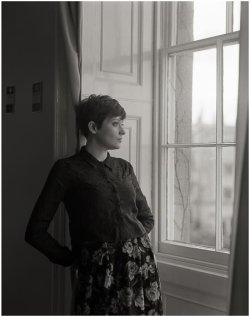
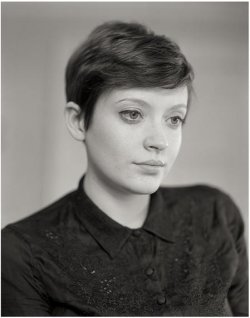
I wanted to test some expired (6 years) x-ray film and thought it would be a good opportunity to test two different 300mm lenses at the same time. My previous test with this film was very underexposed when using an LED panel and a portable strobe. This time I used daylight on a cloudy day, the results are much better. Something I dislike in close-up head shots is an extremely shallow depth of field where the eyes are sharp but the nose is a blurry blob. For that reason I stopped the lenses down to bring the nose more into focus but not completely. The light level changed slightly between the shots and that's why the apertures used are not the same. I spot metered from a grey card and exposed for that. The sky isn't blown out on either shot. The distance from the camera to the head didn't change between shots but I noticed there was a change in size on the ground glass when I changed lenses. For this test I wanted to find the optimum ISO and dev time which is why there is a 1 minute difference in dev time between the shots. Despite shot 2 having 1 minute extra dev time the contrast is lower. I scanned both of these using the black and white points of the histogram and applied the exact same contrast adjustment in Lightroom before exporting them 2-up.

I'm sharing this for anyone interested. I enjoy researching about how different lenses perform but something I find frustrating is endless words and discussion on forums without pictures to illustrate. Without seeing this side by side test I would never have guessed there would be much of a difference. I know which lens I could happily let go.

Camera: 10x8 Tachihara / Film: Fuji 100 NIF / Film size: 18x24cm / ISO 100 / Dev: Rodinal 1+50
SHOT 1 Lens: 300mm f/4.2 Plaubel Anticomar @ f8.5 (front swing)
SHOT 2 LENS: 300 f/4.5 Schneider Xenar @ f8 (front swing)

Fuji_100NIF_X-ray_Test_web.jpg
 
Ideally we need to know more about the lenses, both are Tessar type designs. Are the lenses coated? The Plaubel lens has a red O between the SN and the Acticomar if coated, early Schneider coated lenses had a red Triangle, this was later dropped, but any Schneider LF lens past SN 4 or 5 million without the triangle would be coated

I have quite a number of Tessar & type lenses, the difference in contrast between Uncoated and Coated lenses is noticeable in use. I used a CZJ T coated 150mm f4.5 Tessar for quite a few years quite happily alongside Multi Coated lenses,

A few years ago I did some tests specifically looking at contrast and vintage lenses, a 120mm f6.8 Dagor, a 165mm f5.3 Tesssar, an Ihagee-Goerz 135mm f6.8 Anastigmat, and some wide angle lenses. I used a DSLR with bellows.

The results were as expected the Dagor had excellent contrast, with only 2 internal air/glass surfaces, the Tessar a drop with 4 air/glass surfaces, and the Ihagee-Goerz, which is a Dialyte, quite a significant drop in contrast, with 6 internal air/glass surfaces.

Ian
 
My Xenar (SN 4445979) doesn't have any red markings, my Plaubel Anticomar has a red circle. I gravitate towards faster lenses, hence my interest in buying the Plaubel Anticomar with its f/4.2 aperture. I have a Carl Zeiss Tessar 16.5cm f/2.7 which I like for portraits on 5x4 as well as a Kodak Aero Ektar 7 inch f/2.5 but for a dreamier look I like my Dallmeyer 8 inch f/2.9 on 5x4 (it does actually cover 10x8).

Portrait from my Zeiss Tessar 16.5cm f/2.7 below, made on a Speed Graphic, HP5, dev in HC110 1+31.

20220811_Speed-Graphic_165mm_HP5_HC110B_02_web.jpg
 
Last edited:
I'm very intrigued to know the criteria you use or characteristics you look for, in deciding which lenses you like or those you could happily let go?
 
I'm very intrigued to know the criteria you use or characteristics you look for, in deciding which lenses you like or those you could happily let go?
Great question. It's hard for me to quantify. When I look at an image I know whether something visually appeals to me or not and this is why I prefer to see sample images instead of discussing tech specs. I appreciate this isn't a helpful answer so lets say it's down to how the depth of field (bokeh) looks, contrast and distortion. I rarely stop my lenses down very far so overall clinical tack sharpness you get with digital is not something I'm looking for.

This is steering away from the original topic of this thread but as a comparison to the image above made with the 16.5cm lens, here's one made with a much more modern Docter Optic 210mm f/4.5 Tessar lens. I appreciate this is closer in but overall this has a more modern look to me. Neither is right or wrong, just personal preference as to which you prefer if you had to pick one.

From my research these lenses were made in a very small quantity, more info here.

20240504_Walshy_Chamonix_210-4.5_FP4_Promicrol_1-9_02_web_01.jpg
 
Last edited:
My Xenar (SN 4445979) doesn't have any red markings, my Plaubel Anticomar has a red circle. I gravitate towards faster lenses, hence my interest in buying the Plaubel Anticomar with its f/4.2 aperture.
No red triangle on a Schneider 1954/5 means most likely uncoated, hence the contrast difference. I'd agree on which lens to keep. All the lenses I've had from this era have had the coating sympols.

I'd always wanted a 165mm f2.7 Tessar, I just missed out on one from MW Classic a few years ago in a Compur shutter at a very good price, but luckily I didn't as it had is . . . . . .

One of the 1930s CZJ lens catalogues mentions the differences in the qualities of the various speed LF Tessar lenses. The sharpest are the f6.3, the f4.5 us the general purpose lens, then the f3.5 and later 165mm f2.7 for press and low light use.

The trade-off with increasing the fastest aperture is edge sharpness drops off more rapidly with wider aperture lenses, and also overall critical sharpness when stopped down. But then these characteristics are often desired for portraits.

Ian
 
Back
Top