Strange spots on sheets

Francis R

Popular Poster
Registered User
Joined
Jan 1, 2023
Messages
321
Hi, yesterday I processed 3 Foma 200 sheets as usual, with fresh chemistry (HC-110 dilution B). I store the film box in the deep freezer but took films out 1 day before loeading the film holders.
On 2 out of the 3 sheets came these kind of strange spots...
Any idea about the problem ?
 

Attachments

  • Untitled_v2.jpg
    Untitled_v2.jpg
    91 KB · Views: 33
How was the film processed? Was it in a tank or tray? What was the agitation regime?

They look like air bells as Bill says, but having them in the middle of a sheet would suggest tray processing with insufficient agitation.
 
The films were processed in the Stearman Press SP-445 tank.
The agitation was: starting with 30 sec then 10 sec every minute for HC-110 (dilution B) and for the fix (stop bath for 20 sec in between). I tap the tank 3-4 times strongly after every agitation to dislodge air bells. This is my usual process.

I developped 9 more sheets, with the same chemistries, in 3 runs. 1st run: no spots, 2d and 3d runs: 1 sheet with spots for each run.

I think the "air bells hypothesis" is really not likely. I believe more in an issue due to defrosting and/or a defect of some sheets of the batch...
 
Could it be condensation forming on the emulsion?

It wouldn't be the first time i've heard of coating faults!
 
They certainly look like air bells.
Are you using water straight from the tap? The mains pressure dissolves a good deal of gas. You could fill a jug with water and let it stand for an hour or two, or use boiled, cooled and filtered (because of scale in the kettle) water for mixing the developer
You might try a pre-wash with vigorous agitation.
Opinion is divided on the benefits of a pre-wash. The argument is that when the emulsion absorbs the pre-wash water, the developer has to displace this, thus reducing the effective development time by a few seconds. I haven’t observed this, but I may simply be a sloppy worker.
Has anybody experimentally checked that bashing the tank removes bubbles?
 
On an Ilford factory tour, some years ago, we were told that the biggest issue was with frozen films, which Ilford does not recommend but knows some people do. They said the film (or paper) needs to unfreeze slowly, so first move it to a refrigerator for a day or overnight before moving to room temperature.

There is moisture in coated materials as well as the packaging, going from say -16ºC to 20ºC is a big 36º change.

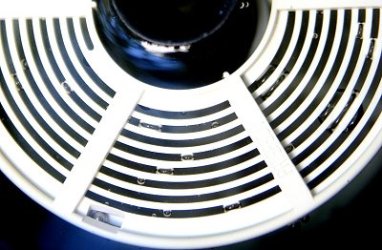
David is right there can be a lot of dissolved gases in mains water, water hardness is also an issue. When I lived in Turkey our tap water came from a borehole behind our apartment block, as we were close to the sea the mineral levels were high, it was undrinkable. This caused issues with air bells.
1717507291410.jpeg

There was no film in the spiral and just tap water, these air bells were difficult to dislodge. I mix my own Pyrocat HD and cured the issue with a couple of drops of wetting agent.

Foma films develop much faster than other makes, so if there were air bells that didn't dislodge with initial agitation, that's what they would look like.

Ian
 
@ DavidM: yes I use water straight from the tap. But the thing is that my process is 100% the same as usual (film storage, process, water), unless I'm going crazy :)...
I shall try other films (Kodak, Ilford) stored in the same condition.
 
Back
Top