Advice on presenting prints - Frames & Presentation Matts

Tom123

Active Member
Registered User
Joined
Sep 27, 2020
Messages
15
I'm about to begin the process of making some frames for a show of mine.
I was wondering if the convention tends to be for larger frames with larger prints to have wider mouldings than smaller frames?

Also are Presentation Matt border generally consistent ? ( I was thinking a 2" border irrespective of print size)

In the last show I went to I believe they followed this rough formula.

Advice/thoughts would be greatly appreciated
 
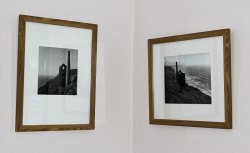
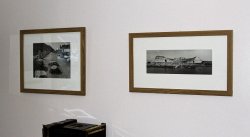
In general, a show looks better on the wall if the frames are consistent. A multiplicity of styles or sizes is a distraction. This is not to prohibit different sizes, but they should be considered.
This means that the actual print sizes can vary a little.
You will already know that framed prints look better if the bottom of the mat is slightly wider than the others. If they are all equal, for some reason, the print looks too low. There isn’t a formula for this (that I know of) so you have to do it by eye.
I don’t know about wider frames. Are the frames themselves important? My own inclination would be to avoid too many things that can divert attention from the images. For me, the frame is the servant of the image.
Depending on your aesthetic intentions, other advice may suit you better. One can imagine a show where the framing played an important part.
An essay on industrial waste might use frames made from scrap metal, for instance. An essay on recycling might use recycled ones. Martin Parr curated a show in Brighton where naked prints were simply hung on the wall from eyelets, because he preferred to spend the available money on bigger prints. You will be able to think of other examples.
A further consideration is economics. If you have a uniform set of frames, they can be re-purposed for your next exhibition, simply by cutting new mats. Many photographers I know do this.
 
Last edited:
The frames need to be consistent, same width materials, and as David says the bottom of the mat needs to be larger than the top.

The width of the margins is a personal choice, in my case the top margin is around 3" and the bottom 3½" that's in a 20x16 frame. Keep the print sizes consistent, in my case my current exhibition set consists of images shot with 5x4/10x8 cameras as well as 6x6 and 6x17, I print full frame (no cropping). I use the same 20"x16" frames for the 5x4 and 6x6m and slightly different 23"x12.5" for the 6x17.

ex01.jpgex02.jpg

Initially I tried the 6x17 images printed smaller and in 20"x16" frames, but they were out of balance,

When you have printed all the images you need to then sequence them, that's quite important. You may find you need to reprint one or two images to make the sequence more coherent. You may also need to remove images and perhaps substitute with others> It's better to have too many images and then edit some out.

Often I may use 4 or 5 larger 30"x24" frames and prints out of a total of between 50 and 70 framed images. I also group images on sets when hanging in galleries.

Ian
 
Just a small point. Frame makers quote a width for the mat because the machine they use measures from the edge. It's not an aesthetic choice. What counts is how the area of the print looks in relation to the whole frame.

Ian is right about sequencing. It's worth laying out your prints, (or smaller versions of them if you haven't made the fine prints yet), on the floor and simply looking at them, not as a photographer, but as a spectator. You'll almost certainly find that some images sit very nicely together, so you juggle them about until you're happy (ish). If you have a reliable and candid friend, you might let them look and see what they have to say.
Again quoting Ian, you might then decide to reprint a couple when you see them in the context of the others.

All the best with your show. I'm sure it will be a success.
 
Tom, I think the 2" mount border width that you are considering isn't wide enough. Given that one of the functions of a frame is to isolate the image from its surroundings so it can be seen without any distraction, I think 3" is a better width for even a small photograph. But if the moulding itself is wide, you can get away with a slightly narrower mount border.
I also think it looks good if the sides and top mount border are all the same width. (And the bottom border slightly deeper as has been mentioned.) I note that Ian is using 20 x16 inch frames for 5 x4 and 6x6 prints. This means his side borders won't be the same as the top, because 20 x 16 isn't the ideal proportion for either of the ratios he is using, if you want the top and sides to be the same. This is a consequence of using a standard size frame, and Ian is obviously happy with that. I have always made my own frames from scratch. So I first choose my image size, then work out the best looking mount size, then make the frame to suit. I note that you are making your own frames, so you could no doubt do the same.

Alan
 
With my current exhibition series, I played with image/frame size with computerised examples of the different formats and frame sizes before making final decisions, and it worked.

I'd add that David's advice to have a friend help is sound advice, it's something I've nearly always done, it needs to be someone whose advice you trust though.

You also need to be able to articulate and contextualise what your images are saying, perhaps more important if you need funding. I've been down that path a few times, getting Regional Arts funding as well as sponsorship.

Over the past 4 decades I've been involved in a lot of Exhibitions, I've curated over a dozen in Arts funded galleries, that's excluding my own work, and in all cases the sequencing was fine.

There are no rules, but we are telling a story, and we need to tell them well.

Ian
 
Thanks for all the advice, it's certainly given me a lot to think about.

I would say I have a good idea about the sequencing as I have already been down that path in terms of layout for a book. It just comes down to finding the best way to condense the series into the available space. This will likely require a few different sized prints to fill different walls as cost is also a factor for my larger prints. Personally I have never really had an issue seeing different sized prints exhibited together, although I'm sure it would look slightly more coherent with the same sized prints.

Interestingly I don't think I have seen many prints displayed with bottom-weighting which arnt in a square ratio.
I guess the thing with having a larger mat on the bottom is you end up making slightly odd sized frames which can't be repurposed by being flipped for landscape/portrait.

@Alan Clark I will definitely get a sample of a wider mount border to have a look at. Do you have any experience using framing acrylic as oppose to glass? Again trying to keep costs down.
 
Interestingly I don't think I have seen many prints displayed with bottom-weighting which arnt in a square ratio.
I guess the thing with having a larger mat on the bottom is you end up making slightly odd sized frames which can't be repurposed by being flipped for landscape/portrait.

If you have an equal border top and bottom then the image looks like it's offset lower in the frame, it's an illusion. So a ¼" offset (approx) upwards is the norm and has no effect on frame size.

Ian
 
If you have an equal border top and bottom then the image looks like it's offset lower in the frame, it's an illusion. So a ¼" offset (approx) upwards is the norm and has no effect on frame size.

Ian
Ian, what you describe will work, but I don't think it is the norm. If a custom frame is being made for a painting or photograph the norm is to have the sides and top border of the mount the same, and the bottom border slightly deeper, to offset the optical illusion that the image has sunk down. Ideally the bottom border should look very slightly deeper, for satisfying stability. About 10% deeper seems to do the trick.

Tom, you ask about acrylic. Sorry, I can't help. I have never used it.

Alan
 
Tom,
in your original post you ask if it is a good idea to use wider mouldings for larger print. I sense that you are wary about the overall look of having more than one moulding type in an exhibition. I wouldn't worry about this. If grouped nicely, a different moulding on big prints could add a lot of visual interest to the overall layout of the exhibition. In terms of overall layout the most boring photo exhibition I've seen was "White peak Dark Peak" by Paul Hill. This was in a large room in Derby Art Gallery. It filled the room and consisted of a single horizontal line of small prints, all the same size, in frames all the same small size and type. The frames were close together and all the same distance apart, except for the odd doorway. The photographs themselves were very interesting and I spent a lot of time looking at them. I was also able to see how other people reacted to the exhibition. I was the only person who worked his way picture by picture, along the line. Most people who came in glanced round, then walked randomly to one wall, looked at a couple of adjacent pictures, then wandered off to do the same on another wall; then walked out. So much for all the effort Paul Hill had no doubt put in to sequence the exhibition. What the exhibition needed was focal points. I took this on board when I was arranging my own exhibitions of paintings, and photographs.

Alan
 
I was suggesting uniform frame sizes, not uniform print sizes. All within reason of course. If you need larger prints, that's entirely reasonable. Some images just call out to be bigger and as you say, there's the question of fitting to the available space.
But a series of frames that are nearly the same size will puzzle the eye and draw attention away from the images.

I saw Paul's show in Derby too and walked round at least twice, with a visit to Joseph Wright of Derby in between.
 
Personally uniform frame sizes and fairly uniform print sizes, depending on format, are the key to consistency, but as I said earlier that can be punctuated by some larger framed prints, or maybe smaller.

As Alan says, a line of framed images can be boring, particularly if all the images/frames are landscape in orientation, and it's a good point about layout, breaking things up, grouping images. Another option is the use of Diptychs, two landscape images in the same portrait mode frame, something I've done for a couple of exhibitions,

Sometimes the Gallery itself may want to curate and hang an exhibition, or at least have a strong influence. Unlike Alan and David I saw "White peak Dark Peak" by Paul Hill at a gallery in Buxton and the layout was quite different.

Ian
 
Ian, you may be right in suggesting that the gallery staff at Derby took control and curated and hung the exhibition how they wanted. Around the same time I went to a workshop/talk given by Paul Hill and he had some very large White Peak Dark Peak prints - impressively large for prints from 35mm negatives. So it's not as though he only had small prints to offer.

Alan
 
I knew you would have!
Mine is unsigned.... The photographs are still good though. Something interesting about them that you can't quite put your finger on.

Alan
 
Paul is a thinking photographer, not a seeker after sure-fire Camera Club winners. He also avoids the Wow! style of printing. Consequently his pictures are about more than what things look like. Although he has some cracking individual images, his metier is the series. Might we say that he makes pictures “about” something, rather than “of” something?

I quite like rows of identical frames. It’s like reading a book. Do we want different page sizes, different papers? Think how distracting it is to get a magazine stuffed with loose inserts. Doesn’t everybody take it by the spine and shake them out before reading anything.
Others may have other preferences and other intentions.When hanging group shows, a variety of framing styles is almost inevitable. We still manage to make a fist of it.
 
If you come out of an exhibition thinking about the pictures you have just seen, and can't remember a thing about the frames, then the exhibition designer has done a good job. I suspect that there are no rules about how to do this, just as there are no rules about how to make a good photograph..

Alan
 
Back
Top