- Joined
- Sep 5, 2021
- Messages
- 109
Hey
I don't normally dabble with camera movements much, but I have a project where I want to photograph a small rectangular object and use a little perspective correction.
The object when looked at from the front and above looks like this:
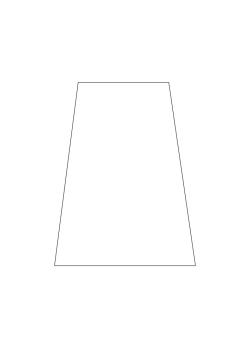
The goal is to make it look like an axonometric drawing (so it will be shot at an angle). Much like this:

To start out, I just put the object head on and then tried to do some perspective correction much like looking at railway lines.
My understanding is that all I need to do is have the rear standard rise. This is the maximum I can do on the Sinar.

I wasn't seeing much correction as far as I could tell (I had to adjust the movement and then change the angle of the tripod) but I am wondering as I am working at such small scale is it a different ballpark to standing in front of a large building at distance. Do I need more extreme movements when working at a small scale?
(Also this was a pretty short lens 120mm, I do have longer ones, so I realise that should give me a different effect, so maybe I can try that).
Any pointers?
I don't normally dabble with camera movements much, but I have a project where I want to photograph a small rectangular object and use a little perspective correction.
The object when looked at from the front and above looks like this:
The goal is to make it look like an axonometric drawing (so it will be shot at an angle). Much like this:
To start out, I just put the object head on and then tried to do some perspective correction much like looking at railway lines.
My understanding is that all I need to do is have the rear standard rise. This is the maximum I can do on the Sinar.
I wasn't seeing much correction as far as I could tell (I had to adjust the movement and then change the angle of the tripod) but I am wondering as I am working at such small scale is it a different ballpark to standing in front of a large building at distance. Do I need more extreme movements when working at a small scale?
(Also this was a pretty short lens 120mm, I do have longer ones, so I realise that should give me a different effect, so maybe I can try that).
Any pointers?