Any tips on developing FP4 plates in DDX

moggi1964

Popular Poster
Registered User
Joined
Dec 5, 2021
Messages
249
So I shot 4 FP4 plates today and want to know if there are any tips on developing them in Ilford DDX?

Should I use the 1:9 over the 1:4 or doesn't it matter?

I use an Ilford Stop and Fix, would I be better using water in place of the stop?

THanks.

M
 
If you've exposed at box speed, it seems sensible to follow Ilford's instructions.


Many people don't like the smell of stop bath and use a water rinse, with agitation, instead. It seems to work well either way.
Higher dilutions are more economical (of course) and are often claimed to give greater acutance.
For small format film, this might make a difference, but it's probably not visible in most sizes of print from an LF negative.. I've noticed little significat difference in practice, other than longer developing times with higher dilutions. Some people donot like standing for long periods in the dark.
As you will have read in other parts of the forum, very great dilutions and very long times are espoused by some. That "some" also warn that it it a process for advenced working, when normal methods have been found wanting (or perhaps out of simple intellectual curiosoty.).
 
I exposed 2 plates metered at 5 ISO and 2 plates at 2.5 ISO given they date back to 1963/64.

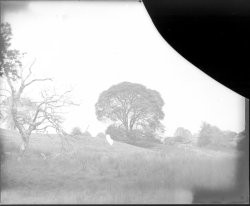
So I went ahead and developed in the DDX 1:4 for 6 minutes at 22c. Agitated the first minute then 3 seconds of agitation each remaining minute. Stop and Fix with Ilford products. Picture below is straight from the scanner (converted to jpg and resized to fit) of a 5 ISO plate.

Crawshawbooth 1.jpg

Your thoughts are welcomed.
 
I don’t quite understand. You said FP4. How is that ISO 2.5 and 5? Have I missed something? Is it just the age?
I ask, because I’ve just had an unfortunate experience with 120 FP4 that expired in 1991. Much greater loss of speed than I’d guessed. Or my own simple incompetence, of course.
 
I don’t quite understand. You said FP4. How is that ISO 2.5 and 5? Have I missed something? Is it just the age?
I ask, because I’ve just had an unfortunate experience with 120 FP4 that expired in 1991. Much greater loss of speed than I’d guessed. Or my own simple incompetence, of course.

Yes, the age. It was a guess but given it is 60 years old I figured I had to start low.

I'll have a go at the ISO2.5 plates tonight though I'll need to use a fresh batch of dev as the last lot just dropped off a cliff in terms of effectiveness. I should have tested it before I tried to dev the Fomapan 200 I shot at the same time as the plates even though I did 1.5x the usual time. Oh well, so much to learn.
 
Your sixty years beats my thirty years. I suppose that mistakes are the way we progress. Best of luck with the next batch.
 
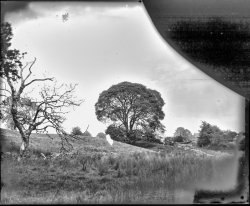
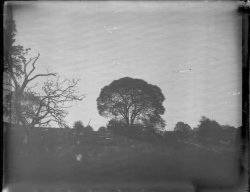
Here is the ISO 2.5 scan. A piece had broken off when removing it from the holder.

I have also included the adjusted version to see what detail is in there. Managed to get some clouds on this one and the large tree has some decent detail.

Fascinating experiment.

Crawshawbooth ISO2.5 Original LR.jpg

Crawshawbooth ISO2.5 LR.jpg
 
Not bad at all. I had another go at my thirty-year-old film with three extra stops and still got much worse results than you.
 
Last edited:
Not bad at all. I had another go at my thirty-year-old film with three extra stops and still got much worse results than you.
Maybe the way the plates are stored has helped them last better than your film. They were in a sealed box, each pair is wrapped in black paper and they are emulsion to emulsion inside that paper.

I have some pre-WW1 plates to try at some point. Thinking I might need to go minus ISO on those :)
 
Back
Top