On Barbarians And Art

thronobulax

Very Active Poster
Registered User
Joined
Aug 29, 2020
Messages
1,394
@David M said:

I'm not sure I concur with everything you say, but I do with the gist of it.
The barbarians are always there, but they change their spots.
We ourselves are of out own time. We are tomorrow's fuddy-duddies. The only thing we can be certain of is uncertainty.

There are two examples I'd like to offer of changes in thinking. Firstly, the well-known case of the Impressionists. Not much need to say more. My second example is Japanese woodcuts. They were held in so little regard that they were used as packing for exported porcelain. Now they are highly valued.

I should add that when I expounded my views to a friend he did say that at least it got people away from endless discussions on burning in the sky a bit more and made them think. As we have illustrated here.


Certainly taste and fashion change. Arts appreciation morphs. This is all to the good. But when you have the arts academy (as a subset of the larger humanities academy) denying the foundations of truth, beauty, and physical reality, that's no longer a change of taste. That's societal suicide.

Historically, the barbarians attacked the walls that protected the society. Today's societal elites - particularly in the arts - are trying to destroy the walls from inside.
 
I have followed from the original threads. I cant claim to be educated or trained in art or photography. I am more technically minded than artistic. Photography satisfies both sides of that spectrum but I have definitely found 4x5 and film photography just clicks for me. I won't be the best here, by a long shot, but I love what I do anyway.
 
Last edited:
Thronobulax, I have just read your opening post in this thread, and your last posts in the thread you transferred from, and I haven't the foggiest idea what you are talking about....

Alan
 
Thronobulax, I have just read your opening post in this thread, and your last posts in the thread you transferred from, and I haven't the foggiest idea what you are talking about....

Alan

I think you need to go look at the link to his own images. Then make your own mind up, but as I've said new members here make higher quality images in terms of composition and output. That's something the OP needs to come to terms with.

Ian
 
I think you need to go look at the link to his own images. Then make your own mind up, but as I've said new members here make higher quality images in terms of composition and output. That's something the OP needs to come to terms with.

Ian
I think you need to go look at the link to his own images. Then make your own mind up, but as I've said new members here make higher quality images in terms of composition and output. That's something the OP needs to come to terms with.

Ian

Sorry @Ian Grant but I don't need to "come to terms with" anything you've said. Not only am I quite happy with my images, so are the people have have them hanging on their walls, some of whom paid princely sums for them as - gasp! - works of art. Your self-anointed title of Keeper Of Quality is puerile at best and reflects a deeply sour personality type. For you to look at the sample portfolio I posted and not find a single image worthy of your righteous standards is a You Problem plain and simple.

I did manage to subject myself to your website for a bit. And I will say, that you are a quite competent commercial photographer as evidenced by the beet/sugar factory series. That is very workman like output I'd expect from an advanced practioner of commercial photography . As evidenced in the other work on display there, though, you are otherwise not a particular standard bearer for quality nor does your work move as art. But it simply doesn't matter - it's what you think of your work that matters, and that's all that matters. That's why I haven't bothered to dissect it and subject you to the same lowbrow drubbing you're so fond of handing out. It doesn't matter what I think of your work.

I seek to help others enjoy this craft as much as I do. When I critique (which is rarely) I do so affirmatively not destructively. You apparently seek to shine a light upon yourself as some kind of oracle of photographic standards and behave like a child when the spotlight moves a bit.

P.S. Incidentally, no less a don of UK photography than Martin Henson found at least one of my images pretty great as he described the photo of snow on the tree branches as "Well seen and well realized". He did that here and it's an image that was shot with ... wait for it - a 127mm Ektar on a 4x5 Speed Graphic ... you know, the lens that you don't think covers the format well. So, is Martin also lousy assessing photographic quality in saying this or are you just plain wrong?
 
Last edited:
Thronobulax, I have just read your opening post in this thread, and your last posts in the thread you transferred from, and I haven't the foggiest idea what you are talking about....

Alan

I have followed from the original threads. I cant claim to be educated or trained in art or photography. I am more technically minded than artistic. Photography satisfies both sides of that spectrum but I have definitely found 4x5 and film photography just clicks for me. I won't be the best here, by a long shot, but I love what I do anyway.

Contrary to the bloviations we've been subjected to in the prior thread, there is no "best" and there never will be. Art is not a competition (except in Uni where failed artists become teachers of art). Art is an expression of how you see the world and it has to satisfy only you.

There are some technical basics that have to be mastered to get consistent images, but beyond that, it's just you taking pictures of things you care about. That's it. That's all of art in a simple sentence. Art is for the artist, not the consumer, not the critic, not for other artists, its entirely for you as you see the world. There is considerable value in forums like this to work out technical matters, but never let other people's view of your work dissuade you if you are happy with the work yourself.
 
Thronobulax, I have just read your opening post in this thread, and your last posts in the thread you transferred from, and I haven't the foggiest idea what you are talking about....

Alan

Go read the book by Kimball I cited and you will fully understand this. He does a brilliant job of explaining what's going on in university arts programs and among critics. Certainly, far better than I could.
 
Last edited:
Go read the book by Kimball I cited and you will fully understand this.

There - a good technique educating people out of the masses to these "unquestioning fools" :)

Myself mostly being a barbarian with no idea of real art no super-top- expert could rob my fun in enjoying pictures which I find great nor have I necessarely kneel down to pictures which they find great.

On the other hand please feel free to give your critiques to my personal kind of barbarian art which I can live with and from what I eventually could learn without punching to the others kidney or challenging a market place meeting at High Noon .

yellowish bright.JPG

Best ,
Reginald
 
There - a good technique educating people out of the masses to these "unquestioning fools" :)

Myself mostly being a barbarian with no idea of real art no super-top- expert could rob my fun in enjoying pictures which I find great nor have I necessarely kneel down to pictures which they find great.

On the other hand please feel free to give your critiques to my personal kind of barbarian art which I can live with and from what I eventually could learn without punching to the others kidney or challenging a market place meeting at High Noon .

View attachment 3667

Best ,
Reginald


Well, I dunno if people are exactly "fools". I rather think the education systems has failed rather completely in teaching both critical thinking an critical viewing, at least it has here in the US and Canada, I can't speak for the UK. The Kimball book is really good and among it's many virtues, I found it taught me a fair bit about classical painting.

"Super-top experts" never are. They just have an amplified sense of their own importance. As I have oft repeated, if you are making art that you find satisfying, that's pretty much all that matters. You are your own arts consumer. That's why critique should tread lightly on things like technique and composition because everyone sees things differently.

So far, I've only detected on person here who feels the need for kidney punches. One can speculate as to why but never really know.

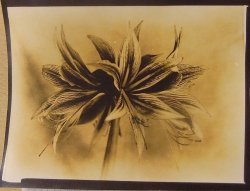
The image is quite lovely but more about it could be helpful. Could you please further comment on: A) How it was made and B) What you were trying to capture.
 
That's why critique should tread lightly on things like technique and composition because everyone sees things differently.

I don't find talking about technique helpful for exploring the soul of a picture.
To me a picture has to have impact.
If not there must be reasons further to conquer it - which we probably have to relearn in today's shortliving times clicking two picks in 1,5seconds .

I remember 15 years ago buying one of Shinzo Maeda's books and surprisingly being disappointed after the first review.
My mistake; my review took only 10 minutes and I didn't give any picture it's time.
After giving each picture around 10 to 15 minutes in the 2. review I slowly discovered the silent power of most pictures in the book.
My question later hasn't been " how done" (technique) but more a "what has he done" (not only the composition) which is well described in the foreword and probably hard to understand for occidental brains.
Trying to understand the motives of the photographer and thereby the photographer himself a bit helped to understand the pictures more than any technical cognition could have done.


The image is quite lovely but more about it could be helpful

Thank you - what exactly do you want to know for being helpful?

It's a contactprint from 13x18cm Xray film showing one of my homegrown Amaryllis plants.
Deeper shadows, yellow to slightly brownish midtones ( my bad digitizing let's missing some lights) and artefacts mainly came from lithprinting which I am struggling with thisadays and what I have to relearn after a long period of doing not.


One can speculate as to why but never really know.

One could try a conversation (in best case the private ones).
Not such a bad thing :)
 
The biggest difference - as best as I can determine - between the UK and US systems is that your system openly declares its intent to build commercial practitioners. I applaud this because photography is a fine vocation and "house painters" are in far greater demand that artists. The US system maintains the pretense that it is teaching people to become artists and this is demonstrable nonsense, at least thus far as I have encountered the graduates of the US system.

In taking your MA, I am curious though, how many of your professors were first class artists in their own right? Was there any emphasis on art standing on its own merits, I wonder?

You are assuming differences that don't really exist between the UK and US systems. The BA and MA courses here vary a little, some are more commercial and documentary based, like Newport in Wales, most are more Art based, and a few somewhere in the middle. But ultimately the students decide their own direction regardless of the predominant course direction.

It is normal here in the UK for courses to have input from working artists, or commercial photographers, and on BA and MA courses it is usual that the Professor and many of the Tutors are first class artists in their own right. They are expected to exhibit and publish work.

Unlike a BA an MA degree is not about learning technique, it's about learning to see and analyse other people's work, contextualise images, planning and producing bodies of work for exhibition and publication. Ultimately analysing your own work.

Here's a brief course description:

The course develops students visual and intellectual awareness in photography through the research and production of a major portfolio of work for exhibition in conjunction with written critical commentary.

Initially you research the work of a photographer (of your own choice) and produce a critical illustrated essay. You need a BA and/or a good portfolio of work to get accepted on an MA course.

There is a 1984 Michael Freeman book "Achieving Photographic Style" that is worth reading, what's important is he shows that all the photographers he showcases work in series or bodies of work, they plan the direction of their photography, there's nothing random.

Ian
 
Back
Top