

-
Thank You For Visiting... Please Click Here and sign up to contribute and reply to posts and download the resources.
You are using an out of date browser. It may not display this or other websites correctly.
You should upgrade or use an alternative browser.
You should upgrade or use an alternative browser.
JCB ALTERNATIVES PLEASE
- Thread starter Camerashy
- Start date
- Joined
- Aug 9, 2016
- Messages
- 861
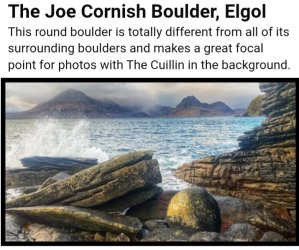
The Joe Cornish boulder? I'm afraid you have lost me....
Alan
Alan
The obvious strategy is an out-of-focus background, but LF photographers seem to prefer sharpness. Contriving to have leading lines in the composition will help, but this implies a subject with the right kind of structure. Placement of the horizon might prove useful. If there is one. A good deal of sky suggests distance.
It doesn’t have to be a boulder of course.
Landscape painters used to include a human figure contemplating the scene.
It doesn’t have to be a boulder of course.
Landscape painters used to include a human figure contemplating the scene.
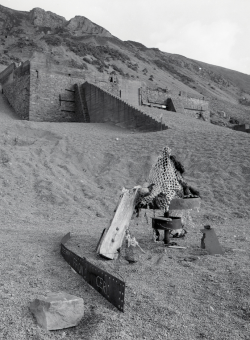
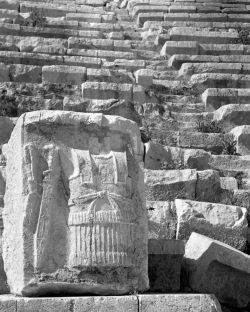
I didn’t know it was the property of Mr Cornish, but the typical arrangement is to use a wide-angle lens and place the camera low down and close to something in the foreground, exaggerating its size in the image. Almost always, a bit of front tilt is needed.

- Joined
- Aug 9, 2016
- Messages
- 861
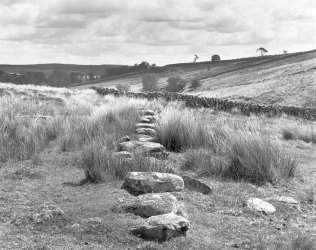
I don't think you absolutely ned a wide-angle lens for this sort of thing. These were taken with a 210mm.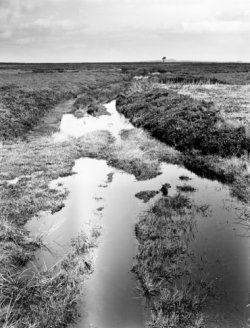

- Joined
- Aug 14, 2016
- Messages
- 268
Any idiot can stick a rock in the foreground of an image. The difficult part, which Cornish was a master of, is in arranging a balanced composition where the foreground links through the midground into the background in one satisfying whole.

- Joined
- Apr 29, 2019
- Messages
- 190
The Joe Cornish boulder? I'm afraid you have lost me....
Alan
Attachments

- Joined
- Oct 17, 2022
- Messages
- 197
The difficult part, which Cornish was a master of, is in arranging a balanced composition...
To me, the pic from #9 looks total different, I can't see a balanced composition.